

Arrive: A social & professional community for newcomers
Arrive is one of the first startups by RBC Ventures, an accelerator division under the Royal Bank of Canada. With 2 million bankable newcomers expected to arrive by 2025 the goal of the platform is to help newcomers in their journey to becoming Canadian.
The Arrive MVP primarily served as a checklist and content application. As we continued to research and speak to newcomers it became evident that the platform needed to concentrate on helping new Canadians adapt to the unfamiliar Canadian job market.
Ongoing research was intertwined with product design and development throughout this project so it appears as such in this case study.
Role:
Product Designer and Researcher
Year:
2017-2019
Company:
RBC Ventures
Phase 1: MVP
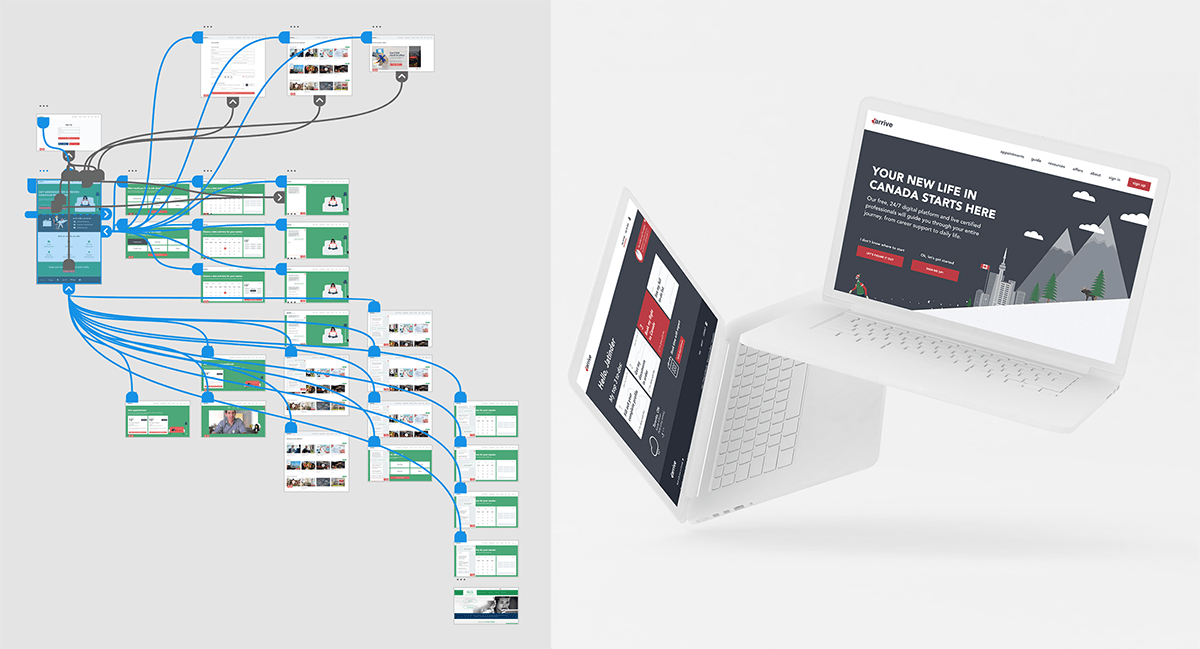
Once I joined the team and got familiarized with the primary market research the 3 of us spent time refining the Value Proposition and defining the initial testing prototype. Two Adobe XD prototypes were created and tested for feature desirability with 10 participants during an in-person supervised session. The prioritized first-release feature set was then flashed out in User Flows.
Defining the Identity:
Based on the market and user research we knew Arrive needed to be trustworthy, relatable, and approachable but not too similar to the government websites. The early landing page was focused on illustration, which our audience resonated well with. These were also the early days of our custom design system. Additionally, we created a variety of collateral materials to share with newcomers, including a two page handout showcasing lesser known sights of Canada, fun facts, and myths.

Phase 2: Validate & Pivot
The primary market for the platform is people immigrating from India. This audience has a large and tightly integrated community who share information and rely on each other’s advice. To understand them better we performed interviews, joined community groups on WhatsApp, and planned and executed a remote Research Project in New Delhi.
New Delhi research project
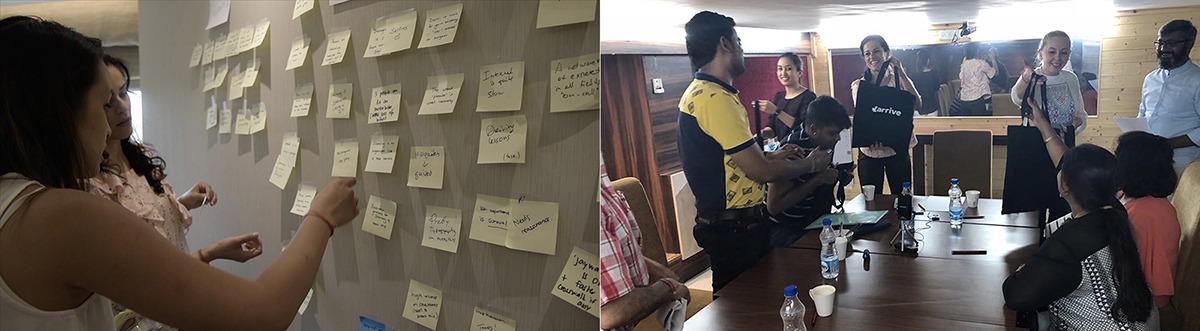
After creating a comprehensive remote research plan, sourcing a local research team, and recruiting participants myself and two company founders traveled to India. On location, we performed 1:1 Interviews, UX Testing sessions, Card Sorting exercises, facilitated Group Discussions (focus groups), and kept ongoing Ethnographic journals. Our research “war room” was set up in one of the hotel rooms where we gathered daily in the morning to prepare and at the end of the day to reflect on the learnings and note key findings and observations on the wall.
In addition to actionable UX and functionality learnings, the key takeaway was that priorities change from survival to career quite quickly post-arrival and that there is a significant difference in how people do business in Canada vs India. The platform goal has shifted to figuring out how we could create a vibrant community around Arrive both, digitally and physically, with the main HMW becoming “How might we help people get to their ideal jobs faster.”
More on this research experience on Medium.
The research for our new vision continued in Toronto. We tirelessly watched HotJar recordings to spot patterns and gaps, Interviewed employers, joined newcomer events, and met people at the airport to welcome them as they entered their new phase of life. Learning patterns lead to many iterative improvements, from small things, like copy and images, to entirely new initiatives.
Insight:
“I’ve enrolled into every relevant program, sent 100s of resumes, keep on having coffee chats, and still no job, I don’t know what I’m doing wrong”
~ Newcomer
Phase 2: Validate & pivot
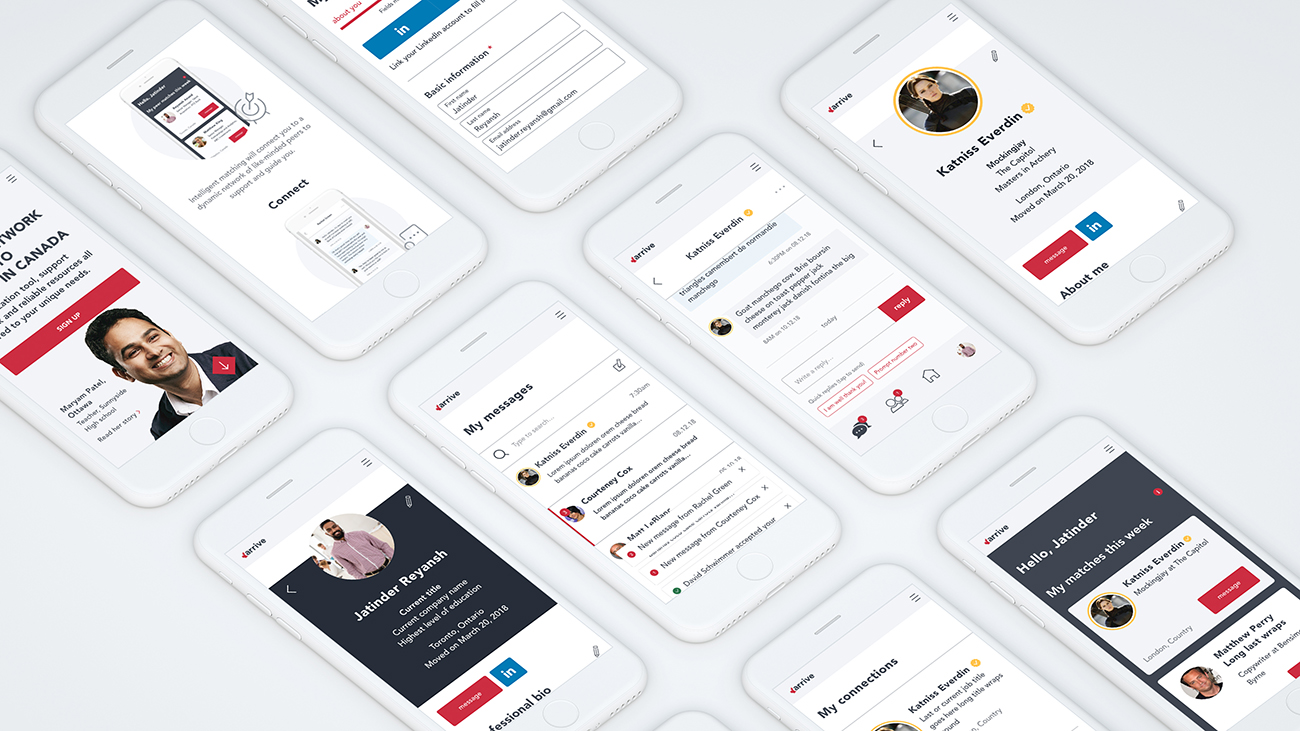
Arrive 2.0 was redefined as a platform that will train newcomers on the Canadian ways of doing business while connecting them with relevant mentors and employers.
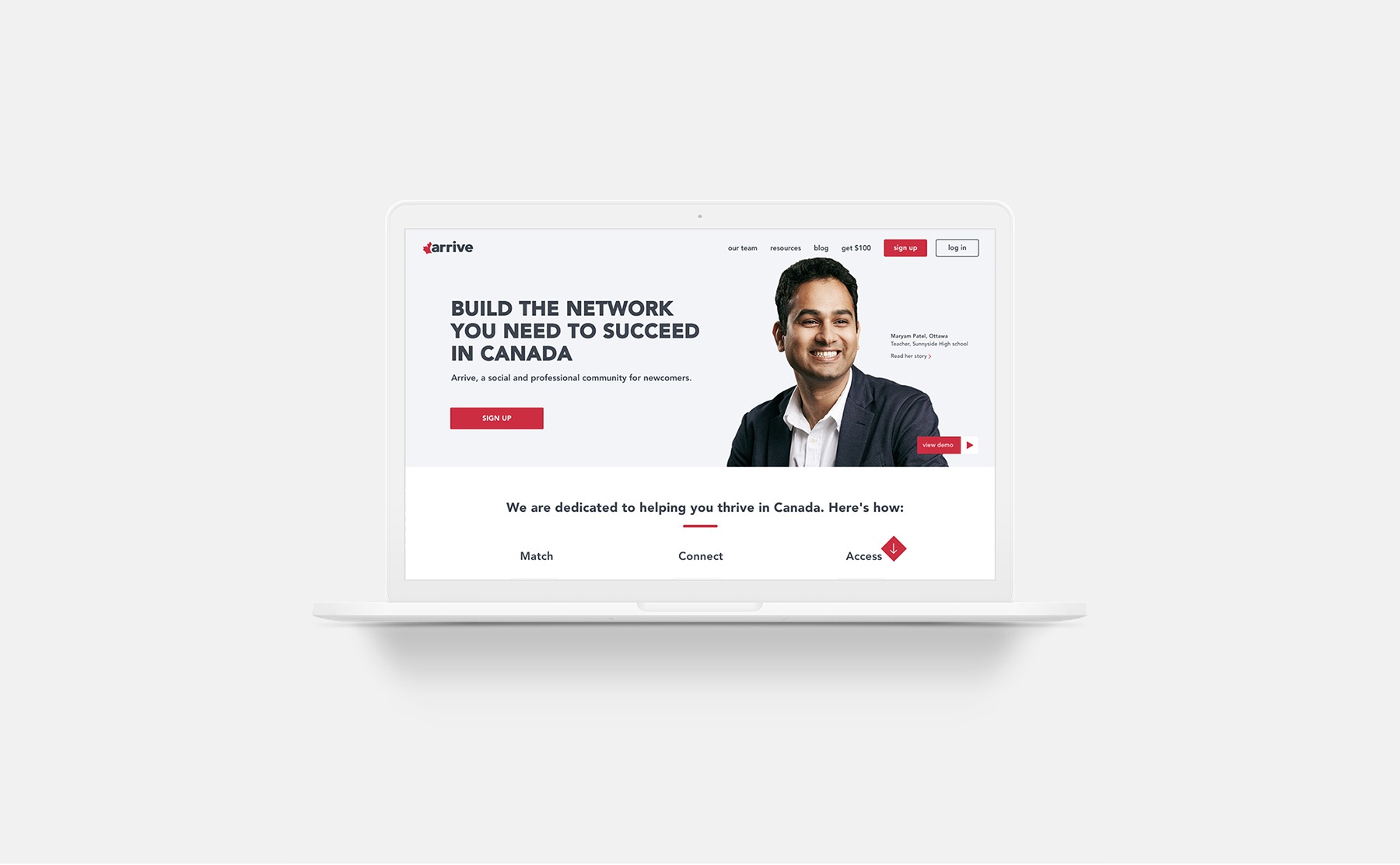
The look and feel of the platform had to follow the new vision so we brought in real people to our hero images and told their real stories as inspiration allowing users to connect with them through the platform.
Some of the monthly activities began to include webinars and live events, so to refine our end-to-end journey I hosted a Service Design workshop to build the Product Blueprint.
As a result, the core value proposition of the app evolved into a peer-to-peer communication and mentor-matching platform, all based on individual user’s needs and experiences.
Insight:
“I know I need to network but I also need a mentor, someone like me, someone I can relate to who can show me the ways”
~ Newcomer